
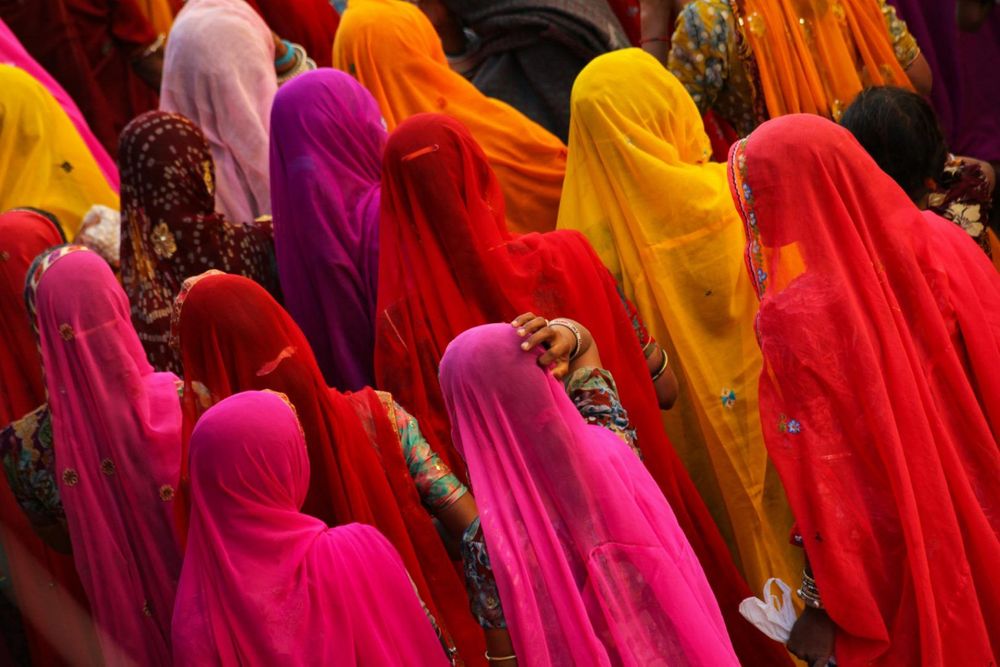
The sari is one of the most iconic and recognizable traditional garments of India. Worn by millions of women across the country, it embodies the cultural richness, regional diversity, and historical heritage of India. This garment stands out for its simplicity and elegance, while offering great flexibility in how it is worn and designed.
History and Origins
The sari dates back to the time of the Indus Valley Civilization, around 2800-1800 BC. The earliest references to the sari are found in sculptures and frescoes of ancient temples. Traditionally, the sari is a long piece of fabric, usually between 5 and 9 meters, draped in various ways around the body.
Composition and Materials
Saris are made from a variety of materials, ranging from cotton to silk, as well as synthetic fabrics. Silk saris, in particular, are highly prized for special occasions such as weddings and festivals. The choice of fabric often depends on the region, the climate, and the occasion.
Regional Varieties
- Banarasi Sari: Originating from Varanasi, this silk sari is famous for its gold thread motifs and intricate embroidery.
- Kanjeevaram Sari: Typical of Tamil Nadu, this sari is known for its rich texture and vibrant colors.
- Chanderi Sari: From Madhya Pradesh, this sari is lightweight and ideal for hot climates, with subtle gold or silver motifs.
- Bandhani Sari: Mainly found in Rajasthan and Gujarat, this sari is characterized by its tie-dye technique.
Draping Techniques
The sari can be draped in several ways, reflecting the cultural diversity of India. Among the most popular draping styles are the Nivi, originating from Andhra Pradesh, and the Bengali style, with its elegant pleats and elaborate pallu (the loose end of the sari). Each draping style has specific cultural and historical significance.
Cultural and Symbolic Significance
The sari is much more than just a garment in India; it is a symbol of femininity, modesty, and grace. For many, it also represents cultural identity and traditional roots. The patterns and colors of saris can also carry symbolic meanings, often representing specific events or beliefs.
Contemporary Evolution
Over time, the sari has evolved to adapt to modern trends while retaining its traditional essence. Contemporary designers reinterpret the sari by using new materials, patterns, and draping styles. This has allowed the sari to remain relevant in the modern wardrobe, while continuing to be a preferred choice for special occasions.
Conclusion
The sari is a perfect illustration of how a garment can capture the essence of a culture. Through its many variations and rich history, the sari continues to fascinate and inspire, representing both tradition and innovation. As an iconic garment of India, the sari bears witness to the country’s cultural richness and diversity.
