
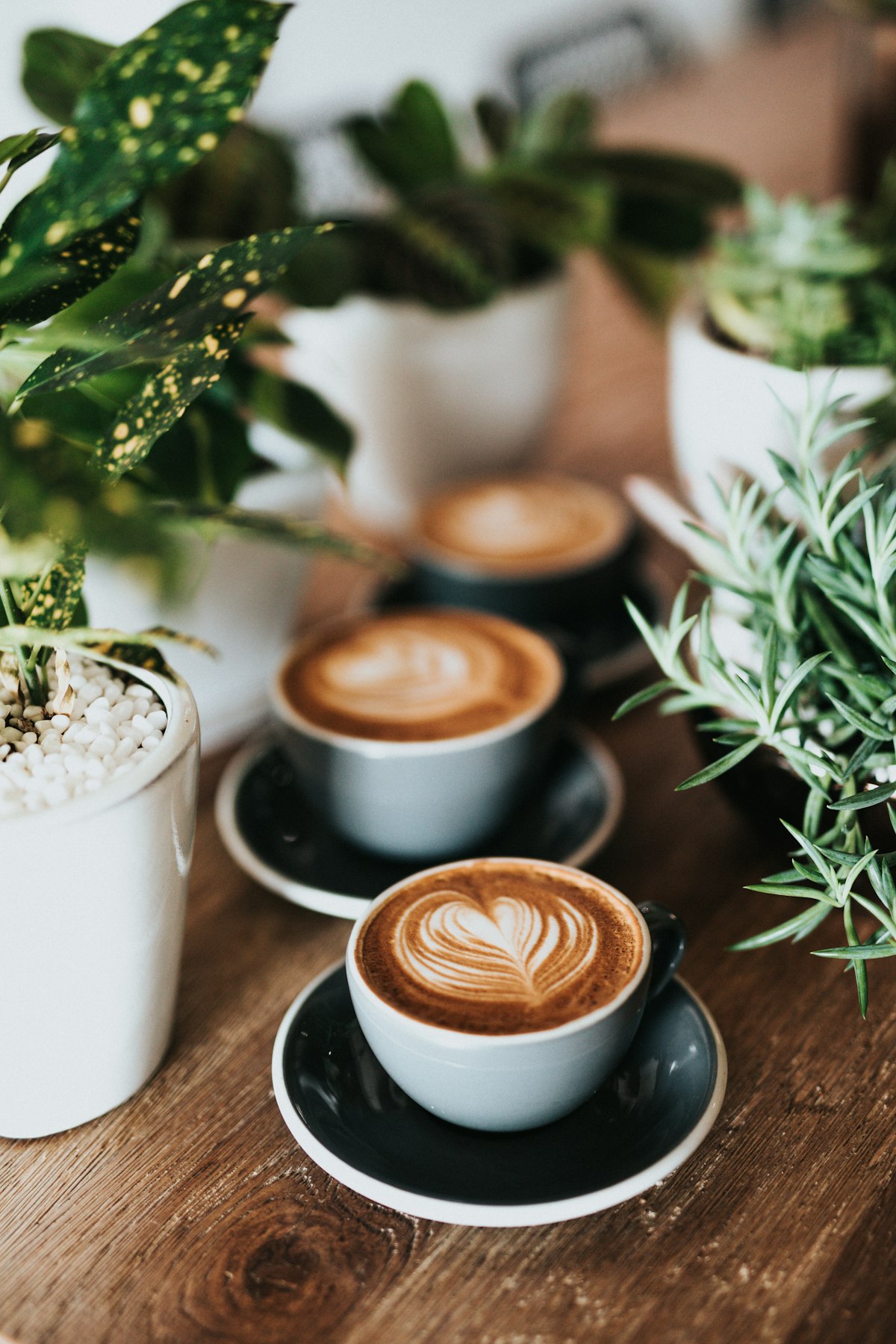
Coffee is far more than a morning stimulant. It is a social ritual, an economic lifeline for over 25 million farming families worldwide, and a cultural artifact that reveals as much about a place as its architecture or its music. Every cup tells a story — of the Ethiopian highlands where the coffee plant was first discovered, of the Viennese coffeehouses where revolutions were plotted, of the Italian espresso bars where a quick shot at the counter is an expression of a entire philosophy of daily life. This journey through the world’s most distinctive coffee cultures explores how different societies have woven this extraordinary bean into the fabric of their identity.
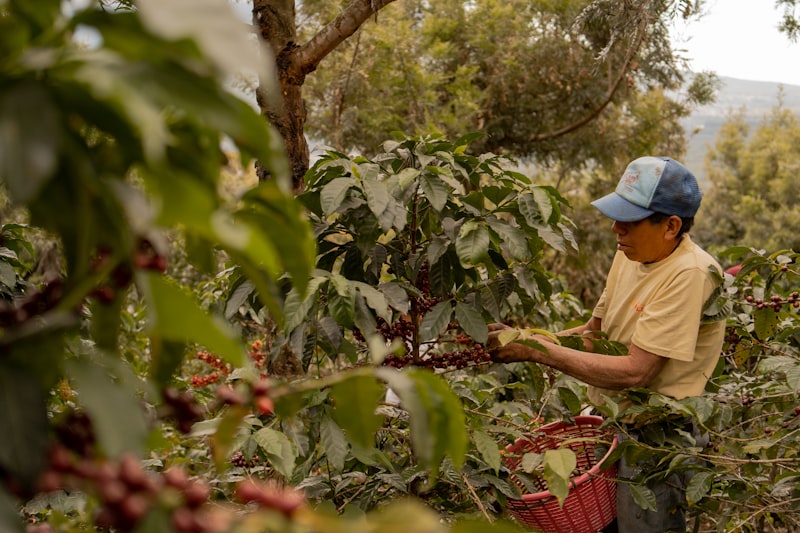
Coffee begins its journey on farms like this one, where cherries are picked by hand at peak ripeness.
Ethiopia: The Birthplace of Coffee
Coffee’s origin story begins in Ethiopia, and the Ethiopian coffee ceremony remains one of the world’s most elaborate and beautiful rituals involving the beverage. According to legend, a goatherd named Kaldi noticed his goats dancing with unusual energy after eating red berries from a certain bush. He brought the berries to a monastery, where the abbot — skeptical of their stimulating effects — threw them into the fire. The aroma of roasting beans was so intoxicating that the monks raked them from the embers, ground them, and brewed the world’s first cup of coffee.
The Ethiopian coffee ceremony, still practiced daily in homes across the country, unfolds over several hours and transforms coffee drinking from a transaction into a social event. The ceremony is traditionally performed by a woman, who begins by washing and roasting green coffee beans over an open charcoal brazier, stirring continuously until they darken and release their oils. The roasted beans are presented to each guest to appreciate the aroma — a moment of shared sensory pleasure — before being ground with a mortar and pestle. The grounds are brewed in a jebena, a traditional clay pot with a spherical base and a long, thin neck, and served in small handleless cups. The ceremony involves three rounds of brewing, with the same grounds used for all three: the first, called abol, is the strongest; the second, tona, is slightly weaker; and the third, baraka, is the weakest and is believed to bestow a blessing. Throughout, incense burns, popcorn or roasted barley is served as a snack, and conversation flows.
For travelers to Ethiopia, experiencing a coffee ceremony is essential. In Addis Ababa, cultural restaurants like Yod Abyssinia and traditional coffee houses throughout the city welcome visitors. For a deeper experience, travel to the coffee-growing regions of Sidamo, Yirgacheffe, or Harrar, where you can walk among the coffee trees — many of which grow wild or semi-wild under the shade of native forest canopies, just as they have for centuries — and participate in ceremonies conducted by the families who have cultivated this crop for generations.
Italy: Espresso as a Way of Life
Italian coffee culture is defined as much by its rules as by its product. An espresso is not merely a small, intense coffee — it is a ritual governed by precise social norms that every Italian absorbs from childhood. The rules are simple but non-negotiable: cappuccino is strictly a morning drink, never ordered after 11 a.m. or after a meal (milk and a full stomach are considered incompatible). An espresso — simply called “un caffè” — is consumed standing at the bar, not sitting at a table, and the entire experience from order to last sip should take no more than two or three minutes. The coffee should be drunk immediately, while the crema is still intact. And it should cost approximately one euro — in Italy, coffee is considered a right, not a luxury, and prices are regulated by social expectation as much as by economics.
The Italian espresso bar is a theater of efficiency. The barista moves with practiced choreography: knock out the spent puck, wipe the portafilter, dose fresh grounds, tamp, lock, pull — all in a fluid sequence that repeats hundreds of times a day. The hiss of the steam wand, the clatter of cups, the rhythmic thump of the knock box, the constant stream of greetings and banter — it is an orchestrated chaos that produces, somehow, a moment of pure, quiet pleasure in a tiny cup.
Different Italian cities have their own coffee identities. In Naples, coffee is a religion and the local style — intensely dark-roasted, almost burnt-tasting, served at a temperature just shy of scalding — reflects the city’s passionate, uncompromising character. In Trieste, the historic port through which most of central Europe’s coffee once flowed, coffee culture blends Italian and Viennese influences: the city consumes roughly twice as much coffee per capita as the Italian average, and its historic coffeehouses, like Caffè San Marco (founded 1914), retain a Mitteleuropean grandeur. In Turin, the birthplace of Lavazza and the home of Italy’s slow food movement, you find both industrial-scale excellence and artisanal obsession, often in the same piazza.
Turkey: Coffee, Fortune, and 500 Years of Tradition
Turkish coffee — recognized by UNESCO as part of the Intangible Cultural Heritage of Humanity — is not just a drink but a complete cultural complex that encompasses preparation, serving, social customs, and divination. The method, introduced to the Ottoman Empire from Yemen in the 16th century, involves grinding coffee to a powder finer than any other tradition, combining it with water and (optionally) sugar in a cezve (a small, long-handled copper or brass pot), and bringing it to a slow boil — traditionally over hot sand or charcoal — until a thick foam forms on top. The coffee is poured into small cups, foam and all, and the grounds are left to settle at the bottom. It is served with a glass of water (to cleanse the palate) and often a small piece of Turkish delight.
The social dimension is as important as the coffee itself. Turkish coffee is embedded in hospitality rituals and life-cycle events. A prospective bride traditionally prepares and serves coffee to the groom’s family during the marriage-negotiation visit — and legend has it that she signals her feelings by adding salt instead of sugar if she objects to the match. More commonly, coffee is the medium through which friends catch up, business deals are discussed, and the rhythm of the day is punctuated.
And then there is the fortune-telling. After finishing the coffee, the drinker turns the cup upside down on the saucer and allows the remaining grounds to cool and form patterns. A skilled reader — and there are many in Turkey — will interpret these patterns, reading your future in the swirls and shapes left in the cup. Whether or not you believe in tasseography, it is a delightful ritual that extends the coffee experience into the realm of the playful and the mysterious. In Istanbul, traditional coffeehouses in neighborhoods like Beyoğlu, Kadıköy, and the streets around the Grand Bazaar serve exceptional Turkish coffee in surroundings that have changed little in decades.
Vietnam: The Cà Phê Culture
Vietnam is the world’s second-largest coffee producer (after Brazil), and its coffee culture is utterly distinctive. Vietnamese coffee is typically made with robusta beans — stronger, more bitter, and containing nearly twice the caffeine of arabica — and prepared using a phin, a small metal drip filter that sits on top of the cup and allows the coffee to steep slowly, drop by drop, over about five minutes. The resulting brew is intense and concentrated.
The signature Vietnamese coffee drink is cà phê sữa đá — iced coffee with sweetened condensed milk. The combination of strong, bitter robusta with the creamy sweetness of condensed milk (a legacy of fresh milk scarcity during the French colonial period) is alchemical: refreshing, indulgent, and completely unlike coffee anywhere else in the world. Cà phê trứng — egg coffee — is a Hanoi specialty in which an egg yolk is whipped with condensed milk and sugar into an airy custard that floats on top of the dark coffee below, creating a drink that is more dessert than beverage.
Vietnamese coffee culture is also a culture of leisure. Unlike the Italian model of the quick espresso at the bar, Vietnamese coffee is meant to be lingered over. The phin takes time to drip, the iced coffee needs time to cool, and the experience of sitting on a low plastic stool on a Hanoi or Saigon sidewalk, watching the city’s relentless traffic flow past, is integral to the pleasure. Coffee shops range from open-air street stalls where the stools are barely a foot high to sophisticated, design-forward cafés in renovated French colonial buildings. In Hanoi, the historic Café Giảng — birthplace of egg coffee in 1946 — remains a pilgrimage site for coffee lovers worldwide.
Sweden: Fika and the Art of the Coffee Break
Sweden is among the world’s highest per-capita coffee consumers, and the Swedish concept of “fika” — a deliberate coffee break, usually accompanied by a pastry (the cinnamon bun, or kanelbulle, is classic), and always shared with others — is central to the rhythm of Swedish daily life. Fika is not merely a caffeine refueling stop; it is a social institution, a moment of enforced pause, and, according to many Swedes, essential to workplace morale and productivity.
The Swedish approach to coffee is characteristically understated. The coffee itself is typically filter-brewed, strong, and served black — though oat milk and other plant-based options are now ubiquitous in a country with high rates of lactose intolerance and environmental consciousness. The emphasis is on the quality of the break rather than the complexity of the beverage. Many Swedish workplaces have contractual fika breaks built into the working day, and the social expectation that you will step away from your desk, join your colleagues, and talk about something other than work for ten minutes is nearly universal.
For visitors, the best way to experience fika is at a classic Stockholm konditori (pastry shop) like Vete-Katten, founded in 1928, where the warren of rooms — each decorated in a different period style — fills with Stockholmers at mid-morning and mid-afternoon. Order a black coffee and a kanelbulle, find a corner table, and absorb the civilized deceleration.
Australia and New Zealand: The Flat White Revolution
No discussion of global coffee culture would be complete without acknowledging the antipodean contribution. Australia and New Zealand have developed a coffee culture that is obsessive, uncompromising, and — in global terms — profoundly influential. The flat white, a drink of disputed trans-Tasman origin (both countries claim it), consisting of a double shot of espresso with steamed milk poured to create a thin layer of microfoam — velvety rather than frothy — has been exported to coffee shops worldwide and represents the antipodean preference for coffee that foregrounds the bean over the milk.
Melbourne is arguably the coffee capital of the English-speaking world, a city where Starbucks — which failed spectacularly in Australia, closing most of its locations — is entirely beside the point. The city’s coffee culture emerged from post-World War II Italian immigration and evolved into something uniquely Melburnian: fiercely independent, quality-obsessed, and woven into the fabric of neighborhood life. Specialty roasters like Proud Mary, Seven Seeds, and Market Lane have achieved international reputations, and even the most unassuming corner café takes its coffee seriously.
The Third Wave and Beyond
Across all of these traditional coffee cultures, a newer movement — sometimes called the “third wave” of coffee — is reshaping how consumers relate to their morning cup. If the first wave was about mass availability (think Folgers and vacuum-packed tins) and the second wave was about the café experience (think Starbucks and the Italian espresso bar), the third wave treats coffee as an artisanal product akin to wine, with obsessive attention to origin, variety, processing method, roast profile, and brewing technique.
This movement has produced its own cultural forms: the pour-over bar where each cup is brewed to order using calibrated scales and gooseneck kettles; the cupping session where coffee professionals and enthusiasts evaluate beans with the rigor of wine tasters; and the direct-trade relationship between roaster and farmer that bypasses commodity markets entirely. Cities like Portland, Copenhagen, Berlin, Tokyo, and Bogotá have become hubs of third-wave innovation, but the movement’s influence is now visible in cafés from Nairobi to Novosibirsk.
What unites all of these coffee cultures — from the ancient Ethiopian ceremony to the newest specialty roaster — is the recognition that coffee is fundamentally a social beverage. It brings people together, creates space for conversation and connection, and provides a daily ritual that punctuates the relentless forward motion of modern life. Whether you are standing at an espresso bar in Naples, lounging on a sidewalk in Saigon, or sharing fika with colleagues in Stockholm, you are participating in a tradition that spans continents and centuries — one delicious cup at a time.
