
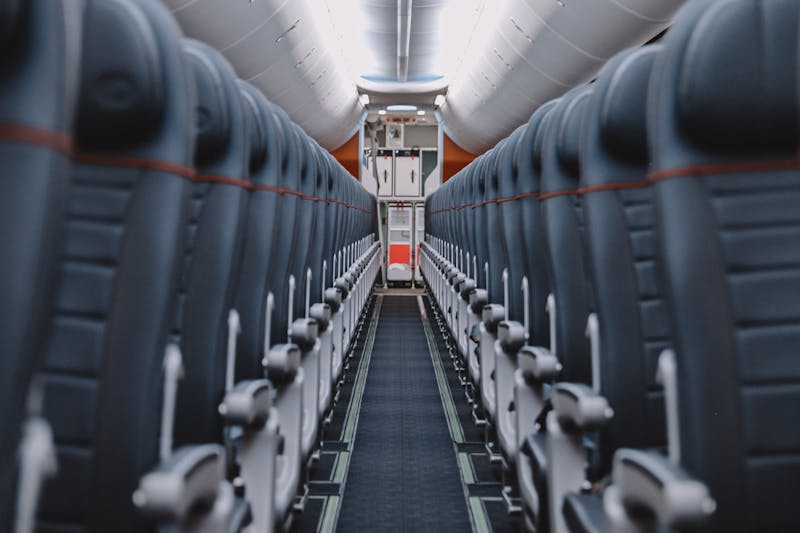
Premium Economy: The New Standard of Air Travel?
Twenty years ago, economy class and business class were the only two options available to travelers. Then Premium Economy appeared, this intermediate class with a bright future. In 2026, it is clear that the prediction has come true beyond all expectations. Premium Economy has become an essential segment of air transport, adopted by almost all long-haul airlines and popular with an increasingly broad customer base. But what is this intermediate class really worth? Is it simple marketing or real added value for the traveler? In this article, we explore the evolution of Premium Economy, compare it between the major airlines, and help you decide if it’s worth the extra price charged.
The History of a Growing Class

Premium Economy took its first discreet steps at the end of the 1990s. It was the Taiwanese company EVA Air which was the first to introduce a distinct class between economy and business class on its long-haul flights. But it was really with Virgin Atlantic in 2000, then British Airways in 2001, that the concept took off. At the time, Premium Economy was seen as a response to business travelers whose companies were cutting budgets and who could no longer justify the high cost of business class.
The 2010s saw the massive adoption of Premium Economy by large companies. Air France launched its “Premium Class” in 2014, first on its Boeing 777s, then generalized to its entire long-haul fleet. Emirates introduced its premium economy class in 2021, followed by Qatar Airways in 2022. In 2026, it is almost harder to find a long-haul airline that does not offer Premium Economy than the opposite. Even low-cost companies are getting in on the act, like French Bee which offers “Premium” on its flights to French Polynesia, or Norse Atlantic with its “Premium Class” on transatlantic routes.
Several factors explain this meteoric growth. On the one hand, business class has become so luxurious (and so expensive) that the gap with economy has widened, creating a void that Premium Economy is filling. On the other hand, the democratization of long-haul travel and the rise in living standards in emerging countries have created a demand for an intermediate product, offering superior comfort without the prohibitive price of business class. Finally, airlines have understood that Premium Economy is a high-margin product: the additional cost per passenger is relatively low (slightly wider seat, increased spacing, improved meals), while the ticket price can be 50 to 100% higher than in standard economy.
The Tangible Benefits of Premium Economy
Concretely, what do you gain by reserving a seat in Premium Economy rather than standard economy? The differences vary between companies, but certain elements are common to most offers.
The main advantage is space. In Premium Economy, the spacing between rows (the pitch) is generally 96 to 102 centimeters, compared to 78 to 84 centimeters in economy. The width of the seat is also greater: around 48 to 52 centimeters, compared to 43 to 46 centimeters in economy. These few extra centimeters make a considerable difference on a flight of 10 hours or more: your knees do not touch the front seatback, you can cross your legs, and you can work or eat comfortably without being stuck.
The backrest inclination is also more generous: in Premium Economy, the backrest generally reclines 15 to 20 degrees, compared to 10 to 12 degrees in economy. Some companies even offer a leg rest or footrest, further improving sleeping comfort. However, it is rare for the seat to transform into a truly flat bed: Premium Economy remains a seated class, unlike Business Class.
Onboard service is another differentiating element. Premium Economy passengers generally benefit from an improved catering service: meals served in real dishes (porcelain or glass), with metal cutlery, and a more elaborate choice of dishes than in economy. Wine and champagne are often included, and hot drinks service is offered before and after the meal. Some airlines also offer a hot breakfast for flights arriving in the morning.
The quality of entertainment is also better in Premium Economy. The screens are larger (12 to 16 inches compared to 9 to 11 inches in economy), and the audio headsets are often of better quality, with active noise reduction in certain companies. Wi-Fi connectivity, generally paid for in Economy, is often included in the Premium Economy rate.
The advantages on the ground are not negligible either. Premium Economy passengers generally benefit from a more generous baggage allowance (two checked bags of 23 kg each, compared to just one in economy), priority boarding, and sometimes a dedicated check-in counter. However, access to airport lounges is generally not included, except with a few companies such as Air France (on presentation of the Gold Flying Blue card) or Emirates (on certain destinations).
Comparing Premium Economy Offers by Airline
Not all Premium Economy are created equal. Some companies have made this class a true premium product, while others are content with an improved economical one. Here is an overview of the most remarkable offers in 2026.
Air France offers one of the best Premium Economy on the market, called “Premium Class”. The seat, 48 centimeters wide with a spacing of 99 centimeters, offers remarkable comfort. The backrest tilt is generous (15 degrees) and the integrated leg rest allows you to find a comfortable position for sleeping. The meal, served in Limoges porcelain with metal cutlery, is prepared by starred chefs and accompanied by a selection of French wines. The 16-inch screens are among the largest in the industry, and active noise-canceling headphones are provided on long-haul flights. Air France also includes an amenity kit with sleep mask, earplugs, socks and lip balm.
British Airways, which invented the term “Premium Economy” with its “World Traveler Plus”, offers a solid but less innovative product. The spacing of 96 centimeters is average, and the seat, although comfortable, lacks padding on very long flights. The catering service is correct without being exceptional, with dishes prepared by the Do&Co caterer. British Airways’ main advantage is its network: present on all of the company’s long-haul flights, World Traveler Plus offers a consistent experience across all destinations.
Emirates unveiled its Premium Economy in 2021 on its Airbus A380s, before rolling it out to its entire fleet. The Dubai company has pulled out all the stops: the seat, in grooved leather, offers a spacing of 102 centimeters, one of the most generous on the market. The 16-inch screen is Bluetooth compatible, allowing passengers to use their own wireless headphones. The meal, served on porcelain plates with silver chopsticks, is worthy of a restaurant. Passengers also receive a luxury Byredo amenity kit, with premium care products. The quality-price ratio of Emirates Premium Economy is excellent, especially on flights to Asia and Oceania where the price difference with economy class is often reasonable.
Qatar Airways, long reluctant to introduce Premium Economy, finally gave in in 2022. Its “Premium Class” is deployed on its Boeing 777 and Airbus A350, with a seat offering a pitch of 99 centimeters and a width of 50 centimeters. The catering service, orchestrated by star chefs, is one of the best in the category, and the on-board entertainment (Oryx One) offers one of the richest catalogs in the sky. The Qatari company stands out for its attentive service and the quality of its bedding, with a hotel-quality duvet and pillow.
Singapore Airlines offers a highly sought-after Premium Economy on its A350 and A380. The spacing of 102 centimeters is among the highest, and the leather seat offers good support. The “Book the Cook” service, which allows you to pre-order your meal from a selection of gourmet dishes, is also available in Premium Economy. KrisWorld entertainment, with its 8K screens and catalog of over 2,000 content, is the best in the industry. Singapore Airlines also offers free Wi-Fi (limited to 30MB) for all Premium Economy passengers.
Delta Air Lines has launched its “Delta Premium Select”, a competitive offer on transatlantic and transpacific flights. The seat, with a spacing of 96 centimeters and a width of 48 centimeters, is comfortable. The catering service, developed in partnership with American chefs, is correct without being exceptional. Delta stands out for its commitment to punctuality and reliability, two important criteria for business travelers.
Value for money: Is Premium Economy worth the extra?
The central question for most travelers is whether the premium charged for Premium Economy is worth it. The answer depends on several factors: the duration of the flight, the price of the supplement, your budget, and your expectations in terms of comfort.
On a flight of less than 5 hours, the difference in comfort between economy and Premium Economy is minimal. The supplement, which can reach 100 to 200 euros, is rarely justified. On a 5 to 8 hour flight (like Paris-New York or London-Dubai), Premium Economy starts to show its interest, especially if you are tall or have back problems. On a flight of more than 8 hours (like Paris-Tokyo, London-Singapore or New York-Dubai), the investment becomes significantly more interesting: the additional centimeters of space, the inclination of the backrest and the improved service make a real difference in comfort and fatigue on arrival.
The cost of the supplement varies considerably depending on the companies, routes and season. On average, a Premium Economy ticket costs 50 to 100% more than a standard economy ticket, and 60 to 70% less than a Business class ticket. On certain very competitive routes, it is possible to find Premium Economy tickets at prices close to full-fare economy, especially during promotional periods. Conversely, on busy roads, the surcharge can reach 200 to 300% in high season.
A smart strategy is to monitor upgrade offers at auction, offered by many companies (Air France, British Airways, Emirates, Qatar Airways). After purchasing an economy ticket, you can make an offer to be upgraded to Premium Economy, sometimes at a much lower price than a direct ticket. Free upgrades are rare, but paid offers are often attractive, especially if the flight is not full.
Another tip: some premium credit cards (American Express Platinum, Visa Infinite, Mastercard World Elite) include free upgrades or discounts on Premium Economy depending on the partner companies. Loyalty programs also offer opportunities to upgrade with miles, often more advantageous than purchasing a Premium Economy ticket directly.
Premium Economy vs. Standard Economy: The Test of Time
For travelers who are still hesitant to upgrade to Premium Economy, a practical question arises: is the difference really noticeable over time? To answer this question, we interviewed several frequent travelers and analyzed feedback on specialized forums.
On a 10-hour flight, for example Paris-Montreal, the testimonies are unanimous: the difference is significant. Premium Economy passengers arrive at their destination less tired, with less back and neck pain, and a better ability to enjoy their first day there. The extra leg room makes it easier to change positions, cross your legs and find a comfortable sleeping position. The inclination of the backrest, even modest, makes it easier to doze off than completely upright.
The improved restaurant service also contributes to a better overall experience. Meals served in several courses, on real dishes, transform mealtime into a pleasant break rather than a chore. Passengers also appreciate the included alcoholic beverage service, which allows them to toast at the start of the trip without having to pay extra.
Another benefit often cited is peace of mind. With a smaller and less dense cabin (generally 24 to 40 seats, compared to 200 to 300 in economy), the atmosphere is calmer, the queues for the toilets are shorter, and the attention of the crew is more personalized. Premium Economy passengers also tend to be older and calmer, which contributes to a calm atmosphere.
However, some travelers find the extra cost not worth it. On night flights where most of the time is spent sleeping, the benefits of Premium Economy are less noticeable. Likewise, on short flights (less than 6 hours), the difference in comfort does not always justify the additional cost. Finally, travelers of small stature or who do not have back problems may find the standard economy perfectly acceptable.
The verdict is therefore nuanced. Premium Economy is a wise investment if you are tall, have back problems, are traveling during the day and want to work comfortably, or are arriving at your destination for an important occasion (wedding, conference, business meeting) and want to be in good shape. On the other hand, if you are flexible and able to sleep in any position, the standard economy remains a rational choice.
The Best Routes and Offers for Premium Economy in 2026
Some routes and companies offer exceptional value for money in Premium Economy. Here is a selection of the best offers available in 2026.
The Paris-New York route is one of the most competitive, with no less than five companies offering Premium Economy: Air France, Delta, American Airlines, United and Norse Atlantic. Prices vary from 600 to 1,200 euros round trip, depending on the season and the company. Air France offers the best product, with its wide seat, its 16-inch screen and its French gastronomy. Norse Atlantic offers the best price, with round trips from 450 euros in low season, for a product that is certainly less refined but very correct.
The London-Singapore route is dominated by Singapore Airlines and British Airways. Singapore’s Premium Economy is legendary, with “Book the Cook” service and 102 centimeter headroom. Prices range between 1,200 and 2,000 euros round trip, a justified investment for a 13-hour flight. Savvy travelers can find promotional offers from 900 euros by booking several months in advance.
The Dubai-Sydney route is one of the longest in the world (14 hours), and Emirates deploys its Premium Economy there on its A380s. For around 1,500 euros round trip, travelers benefit from a premium product with generous spacing, a gourmet meal and legendary Emirates service. The bar at the rear of the cabin, accessible to all passengers, is a unique place of conviviality.
In Europe, Premium Economy is still rare on medium-haul flights, but some companies are experimenting with it. Air France offers “Premium Class” on its flights to the Antilles and the Indian Ocean, with an attractive quality-price ratio for flights of 8 to 10 hours. KLM also offers “Premium Comfort” on its flights to Africa and the Middle East.
To find the best deals, here are some tips: book at least 3 to 4 months in advance to benefit from the lowest rates; watch out for flash sales from companies, which regularly offer discounts of 20 to 30% on Premium Economy; use search engines like Google Flights or Kayak to compare prices and set up alerts; and don’t hesitate to bid on the upgrade offers at auction, which can allow you to obtain a Premium Economy seat at a price much lower than the normal fare.
Future Trends in Premium Economy
In 2026, the Premium Economy is changing, with several trends shaping its evolution. The first is convergence with short-haul business class. While European Business Class (on intra-European flights) is reduced to a simple economy seat with slightly increased pitch and improved service, long-haul Premium Economy tends to offer comparable comfort. Some companies, such as Air France, have even equipped their European Business class with seats similar to their long-haul Premium Economy, further blurring the boundaries between classes.
The second trend is the increased personalization of the experience. Companies are investing in technologies to adapt the service to the individual preferences of passengers: choice of meal before the flight, adjustment of lighting and temperature, personalized entertainment recommendations. Premium Economy thus becomes a tailor-made product, where every detail counts to satisfy demanding customers.
The third trend is the extension of Premium Economy to medium-haul flights. Several companies, including Air Canada and United Airlines, have started to offer Premium Economy on their domestic and medium-haul flights, thus creating a continuity of experience for business travelers. This trend, still marginal, could accelerate in the years to come.
Finally, sustainability is becoming a criterion of choice for Premium Economy travelers. Companies that invest in more fuel-efficient aircraft, sustainable fuels and carbon offset programs attract customers concerned about their environmental footprint. Premium Economy, with its carbon footprint per passenger slightly lower than that of Business class (thanks to a higher seat density), could benefit from this ecological awareness.
Conclusion: A Class that Conquered its Audience
Premium Economy has established itself as a standard for long-haul air travel, offering an attractive compromise between comfort and budget. Without reaching the luxury of Business class, it offers space, service and comfort significantly superior to economy, for an additional price often justified on flights lasting more than 6 to 8 hours.
In 2026, Premium Economy is no longer a marginal option or a simple fad: it is a mature, well-established and constantly improving product. The companies that have adopted it have made it a central element of their commercial strategy, and travelers have acclaimed it. If you haven’t yet tried Premium Economy, treat yourself to this little luxury on your next long haul. You may be pleasantly surprised, and you may never be able to live without it.
